Scaling is the most important preventive care for the health of your teeth and gums. It helps remove tartar — that hard mineral deposit that daily brushing can't remove — before it causes serious illness.
Why do regular descaling?
- Periodontitis prevention : Tartar is the major cause of loose teeth, a chronic inflammatory disease that is irreversible if not treated in time.
- Fight against bad breath : The accumulation of tartar promotes the proliferation of bacteria responsible for halitosis.
- Caries prevention : Tartar accumulates in the interdental spaces inaccessible to the brush, creating foci of cavities.
- Aesthetics of the smile : The elimination of deposits and superficial discolorations restores clarity and freshness to your teeth.
- Long-term economy : Regular scaling prevents the appearance of serious pathologies requiring expensive surgical or prosthetic treatments.
How does a scaling process take place at Cabinet Apex?
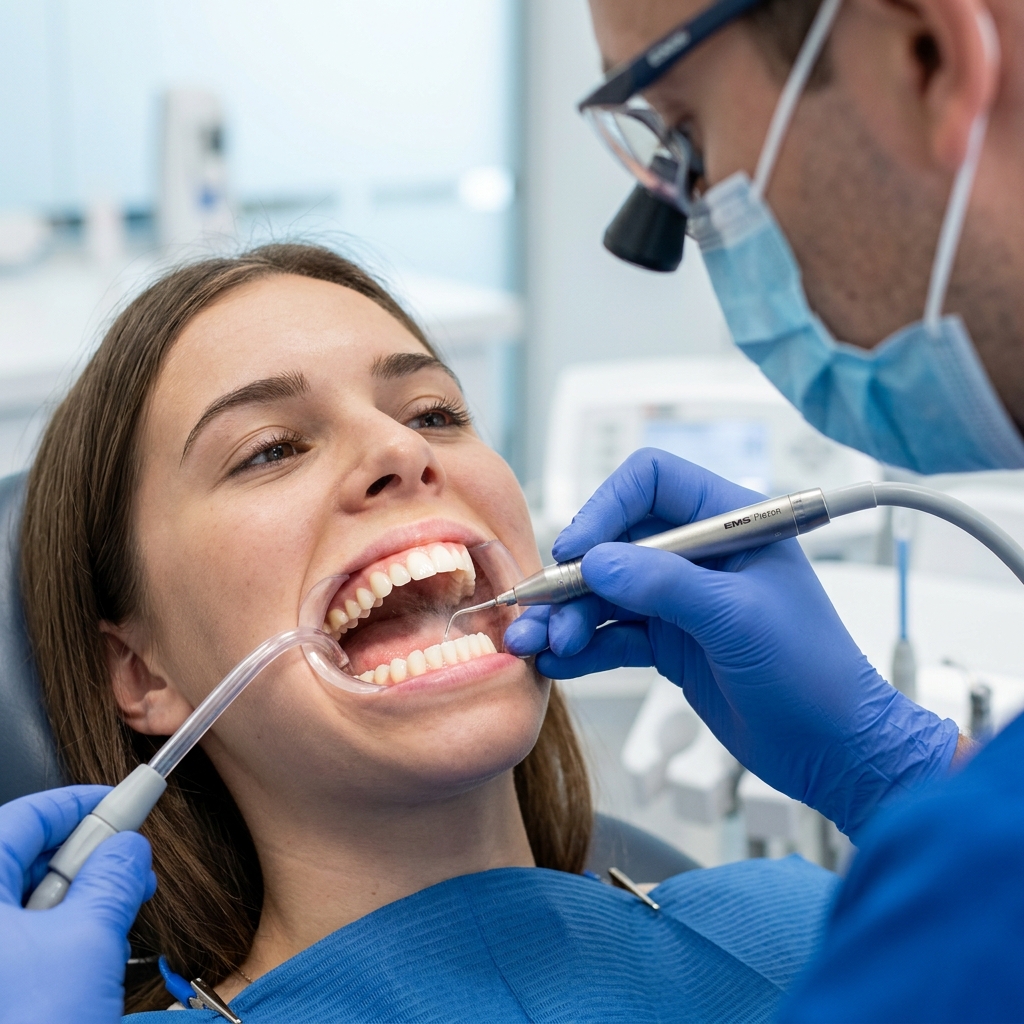
Scaling is a meticulous and painless treatment carried out by our qualified practitioners:
- Assessment and review : Prior visual examination to assess the condition of the gums and locate subgingival tartar deposits.
- Ultrasonic technology : Use of a latest generation ultrasonic device which gently removes tartar using micro-vibrations, coupled with water irrigation.
- Manual finishing : Passage of precision instruments (curettes) if necessary to eliminate residues in narrow corners.
- Professional polishing : Using a soft rotating brush and prophylactic paste to smooth the surface of the teeth, making future tartar adhesion more difficult.
💰 Prices and reimbursement CNS (Luxembourg)
In Luxembourg, basic scaling (1 session per calendar year) is fully reimbursed by the CNS (National Health Fund). Cabinet Apex practices strict conventional rates, without any excess fees for this act.
Recommended frequency: Once a year for patients without any particular problem. We recommend 2 sessions per year for smokers, people prone to periodontal disease or people with orthodontic appliances.